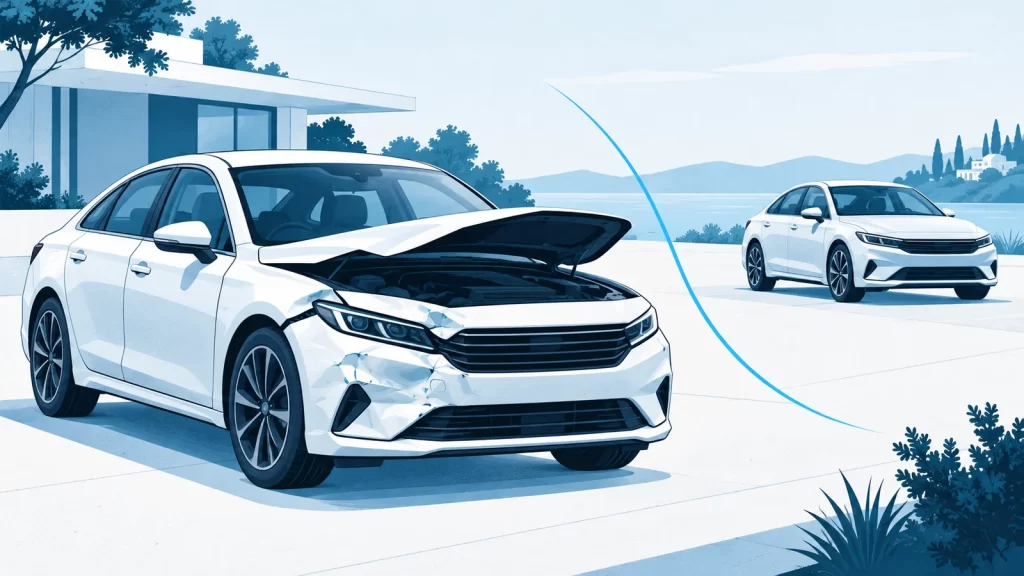


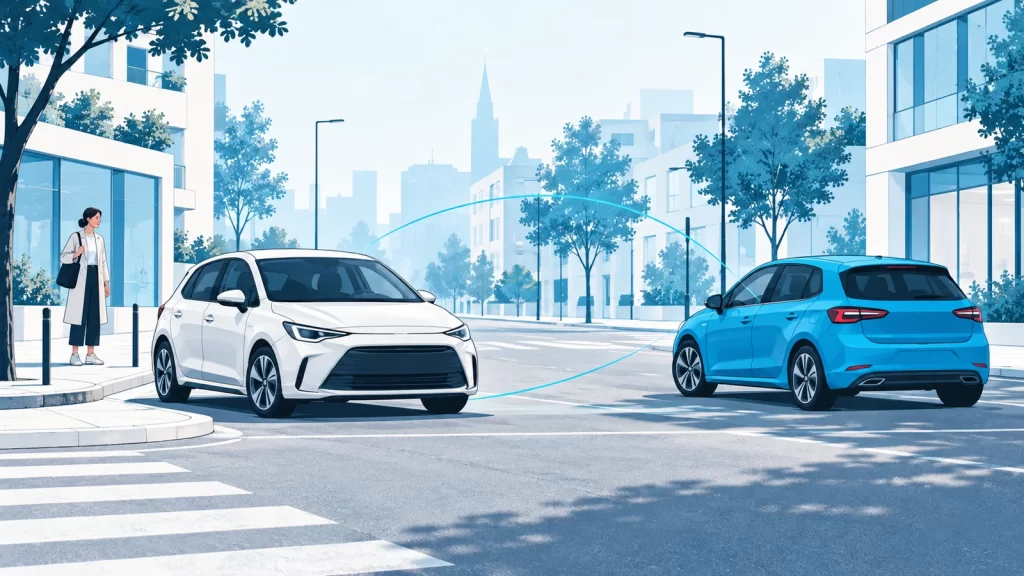
After a collision, two different questions arise: how will damage to others be compensated, and who pays to repair the at-fault vehicle? Third-party motor insurance primarily addresses the first question. Understanding that boundary prevents many mistaken expectations. A valid policy does not cover every expense connected with a vehicle.
In Iran, the principal framework is the 1395 (2016) Act on Compulsory Insurance for Damage Caused to Third Parties by Motor Vehicles. This guide explains third parties, property damage, bodily injury and the claims process. For actual limits and a specific case, check the policy and the rules applicable to the incident.
What is third-party motor insurance, and why is it compulsory?
This insurance provides a mechanism for compensating third-party bodily injury and property damage in incidents within the law. Article 2 requires holders of vehicles within its scope to obtain the prescribed cover. Buying it is therefore more than a decision about protecting one’s own assets: it concerns injured parties and the responsibility associated with using a vehicle.
Compulsory status does not mean every policy has the same property-damage limit or claims service. The law establishes mandatory requirements, while the selected property-damage limit and policy particulars remain important. For the relationship between premiums, obligations and compensation, start with how insurance works.
Who exactly is a third party?
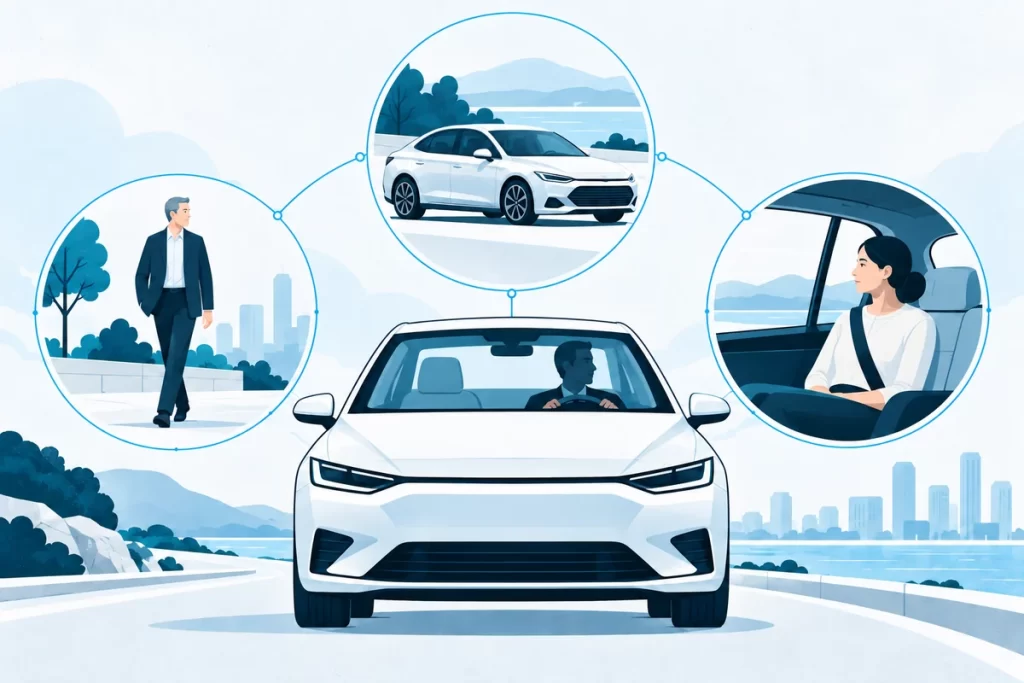
Under the 2016 Act, a third party is a person suffering bodily injury or property damage from a covered incident, excluding the driver who caused it. Pedestrians, the driver of the damaged vehicle and passengers may fall within that definition. The person’s relationship to the incident and the legal definition matter, rather than whether they know or are related to the driver.
For example, if a driver is responsible for a collision, an injured passenger in that driver’s own vehicle can still be a third party. Do not use older rules or online material based on repealed legislation to exclude family members. The at-fault driver’s position is considered separately under driver accident cover.
Third party versus policyholder
The policyholder enters the insurance contract; a third party may have had no involvement in arranging it. Paying the premium does not necessarily make someone the injured party or recipient of compensation. This distinction matters when a vehicle is sold, used by employees or owned within a family. The guide to insurance roles explains the terms through examples.
Keep three important components separate
Bodily injury to third parties
Bodily injury concerns harm to people. Death, permanent impairment and other physical injuries are assessed through the relevant legal definitions and procedures. A verbal agreement between drivers or an estimate from a repair shop cannot determine medical injury and compensation; medical evidence and the legal process matter.
This component is linked to diyah rules and the timing of payment. Comparing a figure on an old policy with an amount heard today is therefore insufficient. This article does not treat annual diyah amounts or premium tariffs as fixed values.
Property damage to third parties
Damage to another vehicle, a wall or other people’s property can be considered here. The policy’s property-damage limit matters and is separate from the bodily-injury undertaking. If several vehicles or assets are damaged in one event, do not assume each claimant has a separate full limit without checking the relevant terms.
The law includes specific rules for some vehicle damage, including rules connected with the statutory concept of a conventional vehicle. A repair invoice alone therefore does not establish the final amount payable. Where a substantial disagreement exists, request a written explanation of the assessment and calculation basis.
Accident cover for the at-fault driver
The at-fault driver is excluded from the third-party definition, but Article 3 provides for driver accident insurance. This concerns the driver’s bodily injury, not repairs to their vehicle. Its conditions and documents should be examined separately from third-party property and bodily-injury claims.
Third-party and own-damage insurance: an example
Suppose car A collides with car B and A’s driver is found responsible. Car B is damaged, a passenger in A is injured, and A’s bumper also needs repair. This is an educational example; the outcome of a real case depends on evidence and the applicable rules.
| Loss or injury | Main route for assessment |
|---|---|
| Damage to car B | Car A’s third-party property-damage cover |
| Injury to a passenger in car A | Third-party bodily-injury cover where the statutory requirements are met |
| Injury to A’s at-fault driver | Driver accident cover |
| Damage to car A’s bumper | Own-damage insurance, if valid cover and the required conditions exist |
Third-party and own-damage insurance therefore do not replace one another. Even if one insurer issues both, they concern different subject matter and conditions. Read the comparison of own-damage and third-party insurance for more detail.
What should you check before buying or renewing?
Read the exact start and expiry dates and times. Submitting an application or receiving a quotation does not prove cover has begun. Vehicle details, use and required information must match reality. If the vehicle is used differently from its recorded use, clarify and document the position.
Next, review the property-damage limit separately from bodily-injury cover. Damage to others can cost more than a casual impression of a small collision suggests. Compare quotations using equivalent limits and conditions; the lowest premium alone is not a sufficient criterion.
Check discount history, ownership-transfer details and policy authenticity. Transfer of a policy and transfer of no-claims discount rights are different matters, with specific statutory rules for discounts. When buying or selling a vehicle, do not rely on a verbal assurance that all discounts transfer. Check current requirements and documents through an official channel.
Prepare a short reference sheet
Record the policy number, insurer, expiry date, property-damage limit, vehicle details and claims contact. Keep an accessible policy copy. This does not replace the contract, but it makes information easier to find in an emergency. The policy-reading guide explains the full review process.
What should you do after a collision?
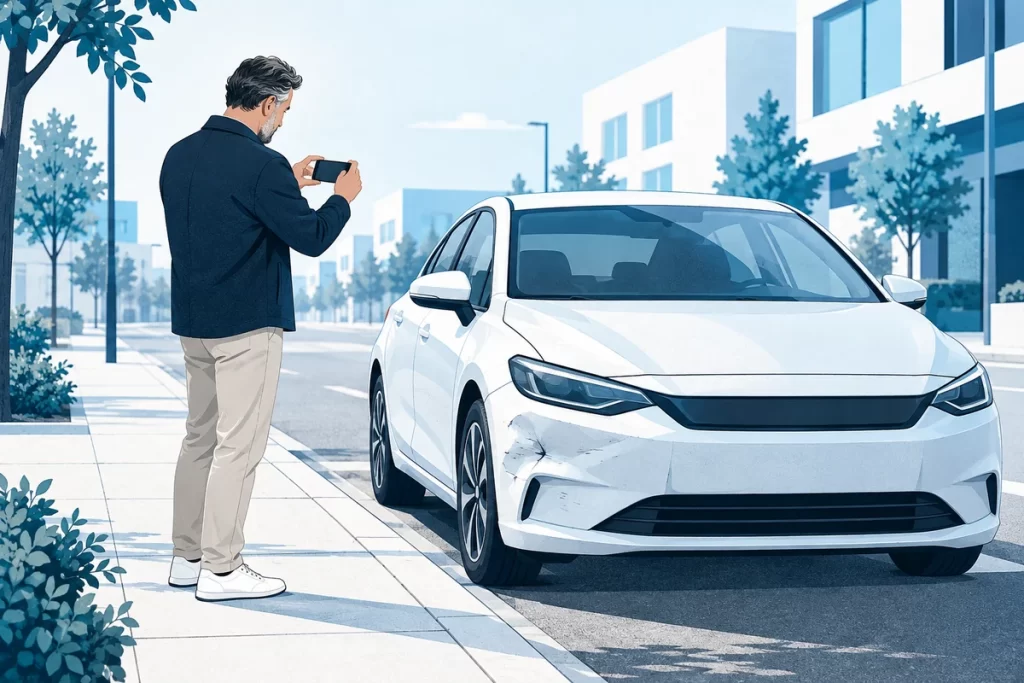
People’s safety and preventing further danger come first. Where someone is injured, use the appropriate emergency and official channels. Taking photographs or collecting evidence must not endanger anyone or delay assistance.
Once the situation is safe, record the parties’ details, vehicles and policies, and preserve evidence where possible. Coordinate with the claims unit before repairs or changes that affect assessment. Required documents depend on whether the claim concerns property or injury, whether responsibility is disputed and the circumstances of the incident.
| Stage | Practical action |
|---|---|
| Notification | Register the incident with the insurer and obtain a reference |
| Documents | Request the checklist for that particular claim |
| Assessment | Establish the valuation basis and any disputed items |
| Completion | Keep submission receipts and request details of missing information |
| Outcome | Obtain a clear explanation of the payment or rejection |
The law allows certain property-damage claims to be handled without a police report under specified conditions. Do not extend this to every collision. Bodily injury, disagreement over responsibility or failure to meet the relevant conditions or limits can change the procedure.
Exclusions, recovery and the compensation fund
These are three different concepts. Being outside cover means that the matter falls outside the undertaking concerned: repairs to the at-fault vehicle, for example, are separate from that vehicle’s third-party property cover. An insurer’s right of recovery means that, in statutory cases, it pays the injured party but may recover the amount from the responsible person.
Article 15 addresses payment and recovery in circumstances including intentional causation, specified proven intoxication or drug-related cases, and absence of the appropriate driving licence. The blanket statement that insurance pays nothing when the driver is unlicensed is therefore not an accurate explanation of an injured third party’s rights. This protection does not remove the driver’s responsibility.
The Bodily Injury Compensation Fund has a protective role in specified statutory circumstances, including certain incidents without valid insurance or with an unidentified responsible party. It is not own-damage insurance or a general guarantee of all property losses. If the fund may be relevant, check the case requirements and documents through the appropriate official process.
Common mistakes
- Treating the at-fault driver and all passengers as having the same insurance position.
- Comparing premiums without considering property-damage limits.
- Using previous years’ diyah figures or procedural thresholds as current values.
- Repairing a vehicle before clarifying inspection and evidence requirements.
- Assuming a driver’s breach always removes an injured third party’s rights entirely.
- Expecting third-party cover to pay traffic fines or every vehicle-related loss.
For agency staff and insurance students, a useful exercise is to divide each case into the injured person, the type of loss and the relevant undertaking. This sequence discourages premature answers and identifies the information still needed for an assessment.
Summary
Compulsory third-party motor insurance is an important protection for people suffering loss in vehicle incidents in Iran. Examine third-party property damage, third-party bodily injury and the at-fault driver’s accident cover separately. Valid cover, a considered property-damage limit, evidence and a clear claims route are more useful than memorising disconnected figures or terms.
Frequently asked questions
Can a passenger in the at-fault vehicle be a third party?
Yes. The statutory definition can include that passenger. The excluded person is the driver causing the incident; a family relationship alone does not remove a passenger from the definition.
Does the at-fault vehicle’s damage get paid?
Not under that vehicle’s third-party property-damage undertaking. Examine own-damage insurance and its conditions for that loss.
Is driver accident cover the same as third-party cover?
No. Although usually provided alongside it, assessment of the at-fault driver’s bodily injury has a separate basis and should not be confused with third-party rights.
Can every collision be handled without a police report?
No. That procedure has statutory requirements and limits. Clarify the situation with the relevant authorities and claims unit before leaving or repairing the vehicle.
Do all discounts pass to the buyer when a car is sold?
Do not assume so. Policy transfer and no-claims discount entitlement follow different rules, requiring review of ownership records and current requirements.
Does the fund cover property damage involving an uninsured vehicle?
The Bodily Injury Compensation Fund provides the bodily-injury protections specified by law. Do not treat it as a general replacement for property-damage or own-damage cover.